I was not really all that into this article. I didn't even finish it but after reading about half of it, I noticed that it got repetitive. Sometimes I felt like I was reading the same stuff over and over again. But maybe that's just how some authors like to get their main points across.
As I first started reading this article, one particular quote stood out to me from the very beginning and that quote was "You must arouse children's curiosity and make them think about school. For example, it's very important to begin the school year with a discussion of why we go to school. Why does the government force us to go to school? This would set a questioning tone and show the children that you trust them and that they are intelligent enough. at their own level, to investigate and come up with answers". I think this is an excellent quote. I really like it and I completely agree. If children know you have faith in them and think that they are capable of doing something, they are going to try much harder because they know that you have confidence in them. The questioning tone is a great way to approach things, especially if maybe you are a first year teacher. Another thing I like about this quote is that it does not insinuate that they is always one answer for everything. When asking a question that begins with why, there sometimes may be more than one answer. I bet if a teacher asked "Why does the government make us go to school?" in a primary school, you would get a variety of different answers.
Points to share: I do wonder what other points stood out to people while reading this article and did anyone else find it repetitive?
Monday, April 22, 2013

Sunday, April 14, 2013
Citizenship In School- Connections
When reading this article by Christopher Kliewer, it made me think back to Delpit, specifically when she talks about the rules and codes of power. Delpit tells us that we need to teach the kids the rules and codes of power so they know right from wrong. In this article, Kliewer believes that children with disabilities need to be mixed in regular classes with students who do not have disabilities, mainly so the children know that they are equal and not being separated from the other students. It also made me think "can separate be equal?"
The article basically focuses on the idea that children should be put together in one classroom whether they have disabilities or not. No child should feel how little Mia Peterson felt when she was in school. As educators, we do not want the children to feel sad and angry that they are not with other children. It just makes them feel like they can not achieve as much as the other students. Kliewer believes that if you want your child to be successful in this society, they need to comprehend a specific "dialogue".
Kliewer believes that schools act like "sorting machines", which reminds me of tracking. Schools discriminate students by their race, ability, and gender. When schools separate the children like this and begin to track them. it creates a competition between the children, which is not what we want. Tracking can be viewed as discriminating against children. If children know they are being put in the special ed classes, they are just going to view themselves as not as smart as the other children.
My point to share is this. This quote caught my attention while reading and I was wondering what other people thought of it: "It's not like they come here to be labeled, or to believe the label. We're all here-kids, teachers, parents, whoever-it's about all of us working together, playing together, being together, and that's
what learning is. Don't tell me any of these kids are being set up to fail."
The article basically focuses on the idea that children should be put together in one classroom whether they have disabilities or not. No child should feel how little Mia Peterson felt when she was in school. As educators, we do not want the children to feel sad and angry that they are not with other children. It just makes them feel like they can not achieve as much as the other students. Kliewer believes that if you want your child to be successful in this society, they need to comprehend a specific "dialogue".
Kliewer believes that schools act like "sorting machines", which reminds me of tracking. Schools discriminate students by their race, ability, and gender. When schools separate the children like this and begin to track them. it creates a competition between the children, which is not what we want. Tracking can be viewed as discriminating against children. If children know they are being put in the special ed classes, they are just going to view themselves as not as smart as the other children.
My point to share is this. This quote caught my attention while reading and I was wondering what other people thought of it: "It's not like they come here to be labeled, or to believe the label. We're all here-kids, teachers, parents, whoever-it's about all of us working together, playing together, being together, and that's
what learning is. Don't tell me any of these kids are being set up to fail."
Wednesday, April 10, 2013
Finn- Extended Comments
As I started reading "Literacy With An Attitude" by Finn, I was a little confused. But after finishing reading the preface and chapter one, I had a better understanding of it. After completing the reading, I still was not fully confident with it. So I went and looked at other peoples blog and Nicole's really stood out to me.
First off, I really love the picture Nicole put up on her blog with the block and the circle that says "you are here." I completely agree with Nicole when she says "This Type A teacher sounds and nearly represents everything perfect; someone who is neutral towards everything and does all things out of goodness. However the flaw in this is that to remain “neutral” is to represent not both or no political groups but represent the dominant one." So, one thing that it seems that we both agree on is that teachers reinforce this. Another thing I agree with is that teachers want to help their students aim to become "critical agents” by providing conditions where students can "speak, write, and assert their own histories, voices, and learning experiences.". Nicole also mentioned this in her blog. I think Nicole picked out a lot of great quotes from the text and I agree with all of them. Her blog really helped me to understand things more, especially when I watched the video she put up. If anyone has not watched the video, I would highly recommend watching it!
First off, I really love the picture Nicole put up on her blog with the block and the circle that says "you are here." I completely agree with Nicole when she says "This Type A teacher sounds and nearly represents everything perfect; someone who is neutral towards everything and does all things out of goodness. However the flaw in this is that to remain “neutral” is to represent not both or no political groups but represent the dominant one." So, one thing that it seems that we both agree on is that teachers reinforce this. Another thing I agree with is that teachers want to help their students aim to become "critical agents” by providing conditions where students can "speak, write, and assert their own histories, voices, and learning experiences.". Nicole also mentioned this in her blog. I think Nicole picked out a lot of great quotes from the text and I agree with all of them. Her blog really helped me to understand things more, especially when I watched the video she put up. If anyone has not watched the video, I would highly recommend watching it!
Wednesday, April 3, 2013
Brown V.S. Board of ED- Reflection
Sorry for the late blog post! Even thought my last blog post was also a reflection, I felt as thought I could connect this piece to my life. I grew up in Cranston, specifically the Western part of Cranston. A majority of the people living in this area come from white middle-class families. When I was in school, it was almost all white children. I think in my whole elementary school there was about two people of color. I have never dealt with any racial issues because a majority of the people I went to school and interacted with were white. Now that I am at RIC, my eyes actually see the diversity. RIC is most definitely the most diverse school that I have ever attended and this may be the case for other people who come from areas like mine.
As I read through the New York Times Article by Bob Herbert, I agreed with what he was saying and could relate to it in some ways. Herbert tells us that while in school, being separate and equal does not exist. Something else that he tells us in his article is that schools are districted by their location. This is so that the public schools are closer to the inner cities, which are mostly made up of colored students. Herbert tells us because of this location, the schools do not get as much funding and this can be a form of racism. When I think of this situation, it kind of confuses me a little because of the funding. Some cities just don't have the money to give, it is not because there are students of color who attend the school. I do believe that this can count as a form of racism, but I do think that this is a mild case compared to some of the other things we see in our everyday life.
My point to share with the class is this: I would love to hear other people's reactions to the New York Times article by Herbert. Do you agree with what he is saying or disagree? How do you feel about what he tells us about the locations of certain schools and how do you think the location plays a role in the funding?
My point to share with the class is this: I would love to hear other people's reactions to the New York Times article by Herbert. Do you agree with what he is saying or disagree? How do you feel about what he tells us about the locations of certain schools and how do you think the location plays a role in the funding?
Sunday, March 24, 2013
In Service of What- Reflection
As I began reading "In the Service of What", I was a little lost and unsure of what was going on and how I was going to write my blog. As I kept reading, the term community service stayed in my mind. The more I read, the more I had the idea of community service stuck in my mind and I just kept remembering all the community service I had done over the past years. Both authors, Westheimer and Kahne describe different ways to complete community service and ways to get involved in the community to the readers.
Over the past few years, I have completed community service at a few different places. One thing that I did for community service was for my senior project. As the end of my senior year, I volunteered at a daycare. I thought this would be a good idea since I was planning to major in Elementary Education. It was really great to help these children out because you could tell that they did not get much help at home so it felt really good that I could go to their classroom three times a week to help them. This is also how I feel about my service learning placement this semester. I know most of these kids come from low-income families so most of the time their parents are working so they don't have time to go over things with them. It makes me feel a lot better knowing that I helped improve their reading skills.
Something else that I have done is give clothes, toys, and books away to families that can not afford it. Even though I was not going out to buy them brand new clothes and toys, I feel great knowing that maybe I helped make their winter nights a little bit warmer. Many kids, especially in Providence, do not have money to just go buy new clothes whenever they want. Some families can barely put three meals on the table a day. Knowing that I can help these families makes me feel really good. Why should I throw away my old clothes when they are in good condition and can go to people who really need them?
As I read on, I saw that Westheimer and Kahne said that some states require students to do community service in order to graduate. My school did require this and every year the amount of hours increased. When I graduated I only had to complete ten hours. Now, I believe my high school requires twenty hours to graduate. This was put into effect my junior year but I do think it is a good idea to get kids involved with the community so they can see what the real world is like.
My point to share in class is this: How many other people had to complete community service hours in order to graduate? If you did, what did you do and do you think it was useful? If you did not, do you think it is a good idea and how do you feel about not completing the hours? Do you feel as though it has a negative or positive effect on you today?
Sunday, March 17, 2013
Cinderella Ate My Daughter- Hyperlinks
Throughout the story "Cinderella Ate My Daughter" written by Peggy Orenstein, she tells us about a personal experience that she has with her daughter. While her and her daughter are at a family party, she lets her daughter run off. However, when she doesn't return after a while, Orenstein gets nervous. She looks around for her daughter and when she finds her, she is laying on the ground with her eyes closed. A little confused, she looks around at the other children and they tell her that she is pretending to be Snow White.
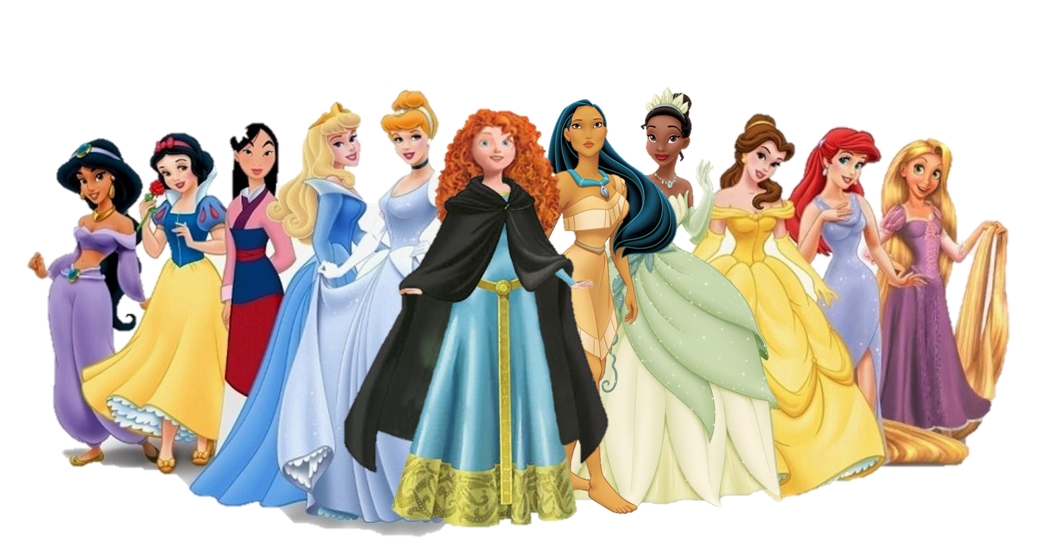
When reading through this article, it kind of seemed like Orenstein was shocked that her daughter would do something like this. So I researched other articles and found out how other parents felt about Disney movies. In one article that I found, the author tells us that based on her research, the negative effects in Disney movies outweigh the positive effects. The author gives an example using "Beauty and the Beast", which I thought it was interesting because Dr. Bogad used the same movie as an example. However, in class we talked about positive things. We talked about how girls might view Belle and what things she does that makes her heroic. But in this article, the author laughs at all this because she notices that Belle isn't in control at all. The Beast locks her in her room and deprives her of food. This falls right into the gender categories that we discuss in class.
I think this article is very interesting because it is mainly focusing on gender, while most articles when dealing with Disney movies focus on race and how they are no African-American princesses, only white. I have a question for everyone. Do you think Disney movies portray negative affects more because of race or gender? As I read through people's blog, I notice that some people don't think it has any affect on children and I am one of those people.

When reading through this article, it kind of seemed like Orenstein was shocked that her daughter would do something like this. So I researched other articles and found out how other parents felt about Disney movies. In one article that I found, the author tells us that based on her research, the negative effects in Disney movies outweigh the positive effects. The author gives an example using "Beauty and the Beast", which I thought it was interesting because Dr. Bogad used the same movie as an example. However, in class we talked about positive things. We talked about how girls might view Belle and what things she does that makes her heroic. But in this article, the author laughs at all this because she notices that Belle isn't in control at all. The Beast locks her in her room and deprives her of food. This falls right into the gender categories that we discuss in class.
I think this article is very interesting because it is mainly focusing on gender, while most articles when dealing with Disney movies focus on race and how they are no African-American princesses, only white. I have a question for everyone. Do you think Disney movies portray negative affects more because of race or gender? As I read through people's blog, I notice that some people don't think it has any affect on children and I am one of those people.
Sunday, March 3, 2013
Unlearning The Myths That Binds Us- Extended Comments
As I read through "Unlearning the Myths That Bind Us" by Linda Christensen, it was really hard for me to pick a side. I have a sick obsession with Disney. It's actually a problem, I probably have more Disney stuffed animals than your average five year old..oops. As much as I love Disney now, I also loved it when I was little too. I grew up watching Disney shows and movies. I knew that the stories weren't real, they were just something called "fairy tales". But it never occurred to me that there would be some kind of "secret education" behind it all. I also know that when I was little, I was focusing on the princesses finding their prince charmings, not trying to figure out about some "secret education" that might be behind the scenes.
After I read Christensen's piece and formed my own opinion, I decided to take a look at other people's views. I wasn't sure whether I agreed or not with what she was saying, but thankfully I wasn't the only one who felt this way. After I read other people's blogs and comments, I realized that other people felt the same way I did. Alicia's blog stood out to me, especially because she took information from Nicole's blog so I could reflect off both of their opinions. Alicia pulled out a quote from Nicole's blog which I also liked. The quote is "After taking this class you are forced to see things that shape society and you as a individual, when in reality you’re not really an individual at all... All in all though, you determine what you want yourself to see, if you want to remain ignorant or accept awareness of these things." Like Alicia did, I highly agree with this quote. Nicole is right, we are forced to see things in society that maybe we didn't notice much before we took this class. I like the part where she says "When in reality you're not really an individual at all". Nicole is right in this statement because most people do what is considered "the norm". Not many people will be a leader and do or portray something different in this society, mostly because I think they are scared of how society might view them. Going back to Alicia's blog, she says that "they are looking into it way too much". I completely agree with Alicia, especially because children do not even notice things like this until their much older and go through life. I'm sure Alicia's daughter isn't watching Cinderella thinking "Why isn't she a black princess?" Kids watch these shows and movies for entertainment, not to try to figure out the secrets behind the scenes.
I still can't really decide if i agree or disagree with this article, but I think I am leaning more towards disagree. I would love to know other people's opinions. Did any Disney shows or movies affect your views on society today? If so, what movie/shows and why? On a positive note, in 2009 I think society does see this issue because they release the film "Princess and The Frog", which has an African American princess and she is portrayed as the main character.

Subscribe to:
Posts (Atom)